
The Implications of US Section 24220: A Government-Mandated Monitoring System in New Vehicles
By 2027, new cars in America won’t let you drive until an AI system approves you. Section 24220 turns your dashboard into a biometric surveillance hub that can override your decisions on the road. Drunk driving deaths are tragic but is embedding imperfect government-mandated tech in every vehicle the right answer? Privacy, false positives, hidden costs, and eroded freedom are all on the table.
Understanding Section 24220 of the 2021 Infrastructure Investment and Jobs Act
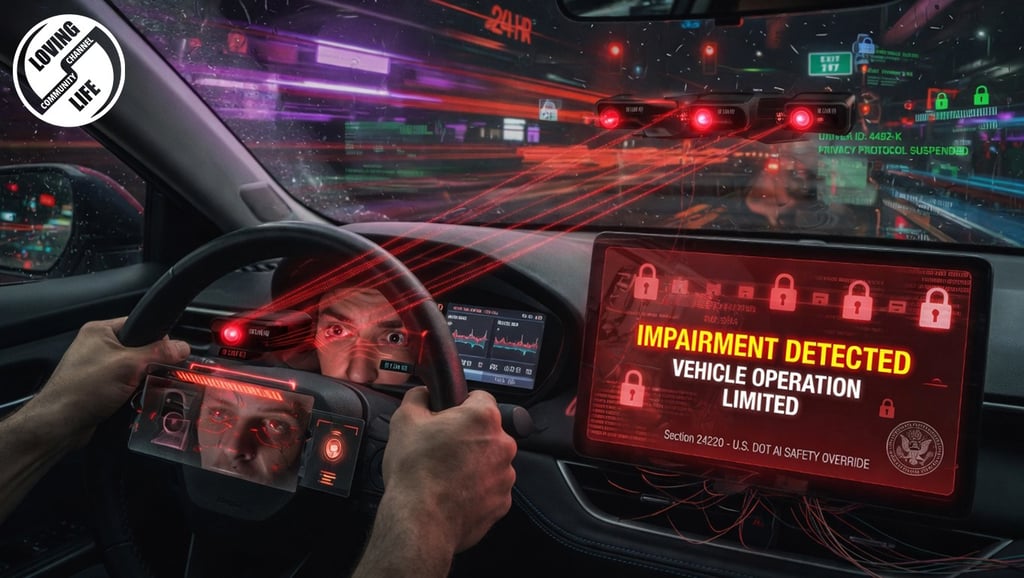
Section 24220 of the 2021 Infrastructure Investment and Jobs Act is a blunt federal intervention in vehicle design. It orders the National Highway Traffic Safety Administration (NHTSA) to mandate "advanced impaired driving prevention technology" in all new passenger vehicles, with rollout targeting model year 2027. The law requires systems that passively monitor drivers and can prevent or limit vehicle operation if impairment, drowsiness, distraction, or alcohol, is detected.
The technology involves infrared cameras, AI algorithms, and biometric sensors embedded in the dashboard. These tools track eye movements, head position, pupil changes, steering behavior, and physiological signals in real time. The goal is straightforward: cut drunk and impaired driving deaths, which still kill over 12,000 Americans annually. Supporters see it as overdue progress using existing driver monitoring tech already appearing in many new cars.
The Status of Technology and NHTSA's Report to Congress
Reality is less rosy. NHTSA’s February 2026 report to Congress admits the tech falls short. No production-ready systems reliably deliver passive BAC detection at the 0.08 legal limit. False positives risk stranding sober drivers with erroneous shutdowns; false negatives let impaired ones through. Even near-perfect accuracy would generate millions of mistakes yearly across the U.S. fleet. NHTSA is still researching and evaluating, yet the statutory mandate pushes ahead unchanged. Lawmakers rejected repeal and defunding efforts, including those led by Rep. Thomas Massie. This forces deployment of immature technology under tight deadlines.
Privacy, Data Security, and Cost Implications
This mandate turns every new car into a rolling biometric scanner. It collects sensitive data, gaze patterns, fatigue levels, potential medical signals, creating privacy risks that the law barely addresses. Hacking vulnerabilities, insurer access, or future government queries are real concerns in an era of connected vehicles. Data ownership, consent, and deletion rules remain fuzzy.
Financially, expect added costs of several hundred dollars per vehicle passed to buyers. Maintenance, updates, and compliance add more. Lower-income drivers will feel it hardest as new car prices climb. The broader shift redefines the driver-vehicle relationship: machines gain veto power over human decisions, reducing autonomy in the name of safety.
Public Response and the Future of Personal Mobility
Public reaction is sharply divided. Critics call it government overreach, an Orwellian step embedding constant surveillance in personal transportation. They worry about mission creep, eroded freedoms, and normalized monitoring of everyday behavior. Supporters emphasize lives saved and point to existing safety features. Legislative pushback continues, but the mandate survived key votes.
This represents a genuine crossroads. Americans must balance legitimate safety gains against tangible losses in privacy and control. Technology should augment human freedom, not subordinate it to imperfect algorithms and bureaucratic mandates. Section 24220 accelerates a future where your car judges you first and lets you drive second. Whether the benefits outweigh the costs will play out on roads nationwide starting late 2026. The trade-off deserves honest scrutiny, not slogans.