
Rising Concerns Over Taxi Intimidation of Private Motorists in South Africa
Concerns over incidents of taxi operators intimidating private motorists for carrying family members or passengers in South Africa. Examines governance challenges, SANTACO’s response, public safety impacts, and practical solutions for safer roads.
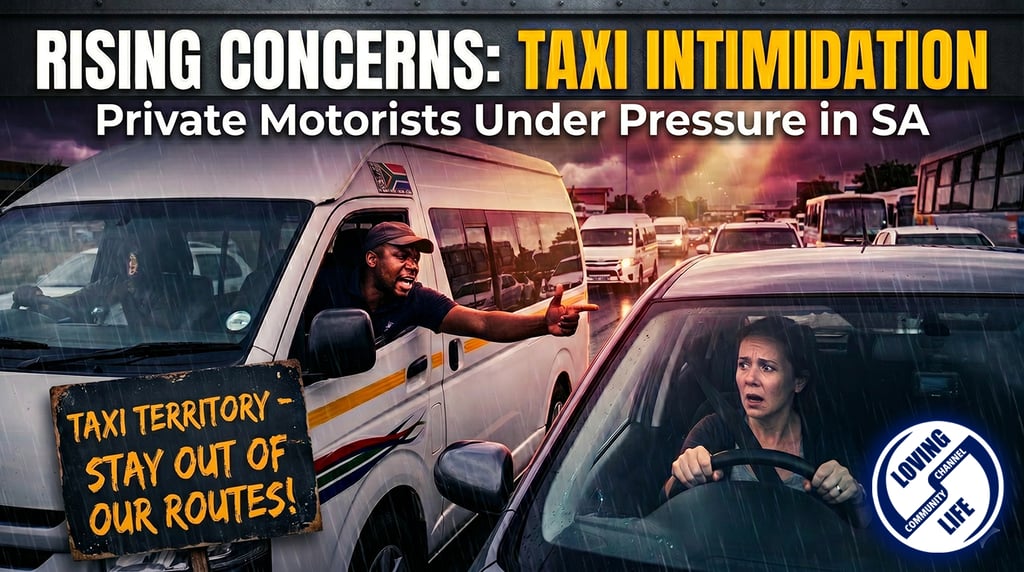
A woman briefly stops at a bus stop to collect her elderly mother after a medical appointment. Moments later, a taxi driver allegedly accuses her of interfering with taxi business, follows her vehicle, cuts her off, and reportedly reveals a firearm while demanding she accompany him to an association office. Bystanders intervene, preventing further escalation. While the full details of this specific incident remain unverified, similar reports have surfaced across the country and sparked widespread concern.
These events highlight ongoing tensions between the formal taxi industry and private vehicle owners. South Africa’s minibus taxi sector provides essential transport for millions daily, but some operators and patrollers have been accused of harassing private motorists for carrying passengers, even family members.
Reports from areas including Ladysmith (KwaZulu-Natal), Gauteng, Mpumalanga, Limpopo, and the Eastern Cape describe incidents where private drivers are confronted, warned against giving lifts, or threatened with vehicle damage. Social media videos and eyewitness accounts have amplified these stories, showing aggressive enforcement of informal “rules” on public roads.
The South African National Taxi Council (SANTACO) has repeatedly distanced itself from such actions. National and regional spokespeople have condemned harassment and criminal behaviour, stating that no official instruction was ever issued to limit passengers in private cars. SANTACO has urged victims to report incidents to the police and emphasised that rogue elements damage the industry’s reputation.
Despite these statements, public frustration is growing. Many commuters and families feel unsafe exercising their basic right to use private vehicles for personal transport. Business owners transporting staff, parents collecting children, and individuals giving lifts to relatives have all reported being targeted.
Why is this happening?
The taxi industry operates in a highly competitive environment. With millions of daily commuters relying on taxis, any perceived loss of passengers, even through legitimate private arrangements — can create tension. Weak regulation, route monopolies, and slow progress on formalisation allow some associations and individuals to enforce unwritten rules through intimidation rather than legal channels.
Investigative programmes like Carte Blanche have documented cases of mafia-style tactics used against private transport, schools, and lift clubs. These include threats, passenger-counting roadblocks, and demands to use taxis exclusively.
Law enforcement and governance challenges
The South African Police Service (SAPS) often responds to incidents after the fact, taking statements and gathering evidence. However, successful prosecutions remain rare, and many victims report slow follow-up. Low visibility of traffic policing in certain areas further emboldens those who act outside the law.
Broader issues compound the problem: congested roads, decaying infrastructure, unreliable public bus and rail services, and economic pressures that increase dependence on informal transport. These factors heighten competition and volatility on the roads.
Impact on ordinary South Africans
For many families and businesses, the consequences are real. Delayed commutes, heightened anxiety, increased insurance costs, and lost productivity add up. Elderly relatives, children, and workers become vulnerable during routine journeys. Road users now install dashcams, adjust routes, or coordinate private shuttles as precautionary measures.
The way forward
Addressing this requires multi-stakeholder action:
Stronger, consistent policing and faster prosecutions for threats and violence.
Clearer regulation and licensing of taxi operations.
Investment in reliable public transport alternatives to reduce pressure on the roads.
Greater accountability from taxi associations to discipline rogue members.
Public awareness and responsible reporting of incidents.
Private motorists should continue prioritising safety, using dashcams, avoiding confrontation, and reporting harassment promptly. At the same time, constructive dialogue between government, taxi bodies, and civil society is essential.
South Africa’s roads belong to all users. Transporting one’s own family or offering a legitimate lift should not become a source of fear. With better governance, enforcement, and mutual respect, these tensions can be reduced and safer roads achieved for everyone.