
Storm Devastates Apple Orchards in Western Cape
Western Cape storm in May 2026 flattened apple orchards in Grabouw and Elgin, destroying late-season Pink Lady and Cripps Red harvests. Productive minority communities face major losses amid repeated weather shocks and infrastructure failures. Honest analysis of impacts on farms, jobs and exports.
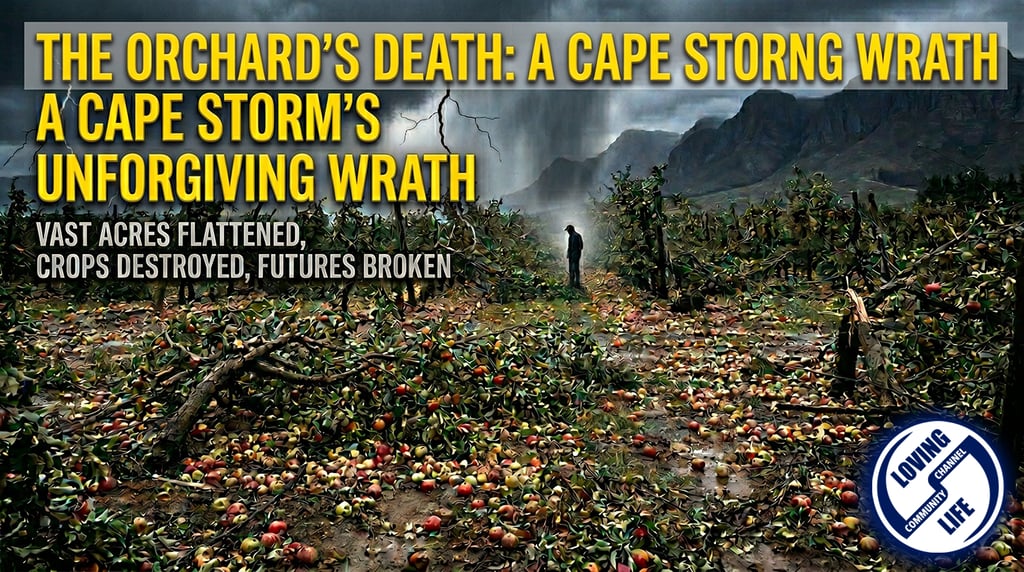
A severe storm system struck the Western Cape between 10 and 12 May 2026. Gale-force winds up to 100 km/h and heavy rainfall flattened sections of apple orchards in the Grabouw and Elgin areas. This event hit the tail end of the 2026 harvest season and delivered another financial blow to the productive minority communities that operate these farms.
Videos shared widely on 12 May show orchard floors covered in fallen Pink Lady and Cripps Red apples. These late-season varieties represented the final fruit on the trees. Entire blocks appear flattened. Branches and debris mix with the scattered crop. Hortgro general manager Jacques du Preez confirmed the impact on the last fruit of the season. Farmers now assess what remains while dealing with the immediate aftermath.
The Elgin Valley forms a core part of South Africa's apple industry. The Western Cape produces around 80 percent of the country's apples. These orchards support export revenue, local jobs and downstream processing. The storm forms part of two successive cold fronts that caused widespread flooding, uprooted trees, power outages and road closures across the province. Flights to Cape Town were diverted. Informal settlements and infrastructure also suffered damage.
This latest weather event adds to existing pressures on the deciduous fruit sector. Earlier in 2026, hail and windstorms in the Langkloof and Ceres regions caused crop losses estimated at 5 to 17 percent in affected areas. Assessments revised pome fruit export expectations downward. Such repeated disruptions test the resilience of farm operations that already manage high input costs, export logistics and infrastructure shortfalls.
Productive minority communities own and manage most commercial apple farms in these valleys. They employ permanent and seasonal workers, pay the bulk of taxes that fund public services and drive rural economies. When harvests are lost, the effects move beyond the farm gate. Packer sheds see reduced volumes. Transport contractors lose loads. Export earnings decline. Communities that rely on these businesses for wages face uncertainty. The cost of replanting damaged trees, repairing netting and clearing debris falls directly on farm owners who carry the risk without reliable state support.
No comprehensive rand-value loss figure has been released as of 14 May 2026. Industry bodies continue assessments. Insurance claims will take time to process. In similar past events, losses in specific blocks reached significant percentages of expected yield. The concentration on premium late varieties amplifies the financial impact because these apples command higher prices in export markets.
South African farmers operate in an environment of institutional weakness. Roads and bridges damaged by flooding delay the movement of remaining fruit. Power outages affect cold storage and packing facilities. Ports and rail networks already struggle with reliability. Each additional weather shock compounds these systemic failures. The productive minority communities invest heavily in mitigation measures such as windbreaks, hail netting and improved drainage. Yet repeated extreme events stretch these resources.
Broader weather patterns in 2026 have challenged multiple fruit sectors. Citrus, table grapes and other crops faced their own disruptions earlier. The apple industry now deals with the end-of-season hit. Farmers note that such events appear more frequent. This requires greater vigilance and capital allocation for resilience. Those who built these orchards through decades of work absorb the losses while continuing to produce food and generate economic activity.
The human element receives less attention in headlines. Farm owners and managers work through the night during storms to secure what they can. After the winds subside, they walk damaged blocks to salvage usable fruit for juice or secondary markets. Workers who depend on harvest income see reduced shifts. This affects household stability in areas where commercial agriculture provides the primary livelihood. Productive minority communities continue to shoulder the responsibility of maintaining operations that support thousands.
Governance failures compound the natural challenges. Disaster response focuses on urban areas and informal settlements while commercial farms receive limited direct assistance. Assessments drag on. Claims processes move slowly. Meanwhile, taxes paid by these same farmers fund relief efforts that rarely return equivalent value to the agricultural sector. This imbalance erodes the capacity of the productive base to absorb shocks.
Self-reliance remains the practical response. Farmers invest in better weather forecasting tools, reinforced infrastructure and diversified markets. They maintain equipment and train teams for rapid post-storm recovery. These measures protect what has been built. Yet the cumulative effect of weather events, policy uncertainty and infrastructure decay tests even the most prepared operations. Clear-eyed realism demands acknowledgment that South Africa's agricultural heartland faces ongoing pressure.
The apple industry contributes substantially to export earnings and rural employment. Losses in key production zones like Elgin and Grabouw ripple through the value chain. Exporters face supply shortfalls. International buyers may look elsewhere if consistency suffers. This threatens long-term market share built over years. Productive minority communities that have developed these supply chains bear the cost of maintaining competitiveness.
As assessments continue, the full extent of damage will become clearer. Some fruit may still be salvaged. Many blocks will require significant rehabilitation. The coming weeks will reveal the true scale. In the meantime, farm owners focus on damage control and planning for the next season. Their ability to do so without proportional state support highlights the importance of vigilance and private initiative.
South Africa cannot afford repeated hits to its commercial farming sector. These operations feed the country and generate foreign exchange. When productive minority communities absorb disproportionate losses from weather and systemic failures, the entire economy feels the strain. Higher food costs, reduced employment and lower tax revenue follow. The pattern is clear. Each new event reinforces the need for realism about the challenges facing those who keep agriculture functional.
Farmers in Grabouw and Elgin will recover what they can from this storm. They will repair, replant and prepare. Their track record shows determination to continue despite setbacks. Yet the frequency of these incidents and the broader context of deterioration require honest recognition. Productive minority communities drive much of the sector's success. Protecting their capacity to operate benefits everyone who relies on stable food production and economic contribution.