
New Empathic Hijacking Tactic Emerges on Cape Town R300
A new empathic hijacking tactic using animals as bait has emerged on Cape Town's R300, targeting motorists in high risk areas. This analysis examines the incident, statistics, and direct impact on productive minority communities who rely on safe roads for business and daily commutes. Vigilance and self reliance are essential.
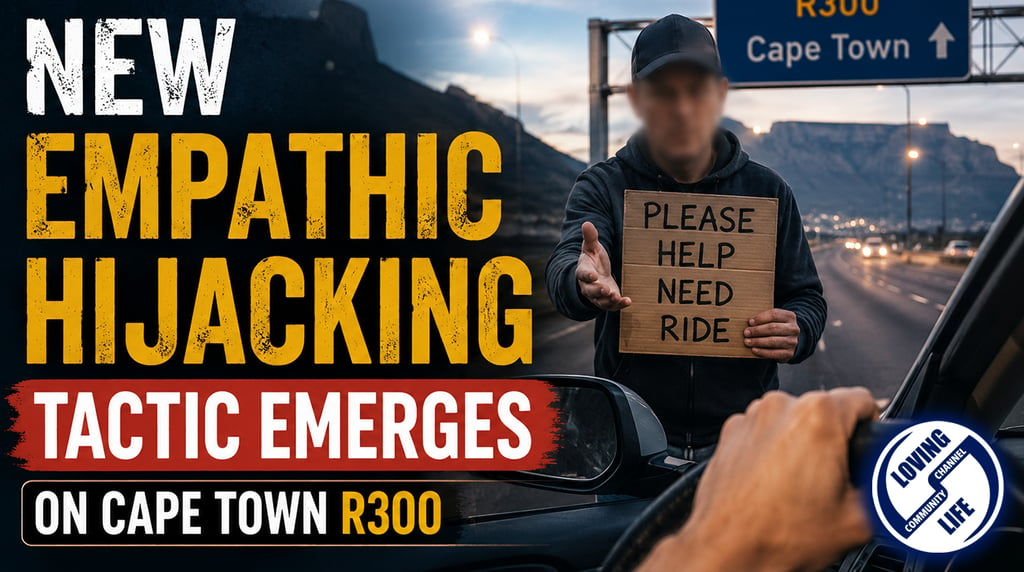
Productive minority communities in South Africa continue to bear the brunt of escalating crime as new tactics emerge to target motorists. On the R300 freeway in Cape Town, criminals have adopted a method known as empathic hijacking. This involves using live animals, primarily dogs, as bait to exploit compassion and force drivers to stop.
The tactic surfaced publicly in early May 2026 following reports from the Animal Welfare Society of South Africa. On 26 April 2026, around 19:42, a motorist spotted a dog hanging from a concrete palisade wall with wire around its neck near the Samora Machel and Stock Road bridge area. Another dog was trapped between the palisades. The driver, suspecting a trap, did not stop and contacted the Animal Welfare Society instead.
Senior Inspector Sivuyile Kilwa and Senior Nurse Michelle Henning responded. Both dogs were dead upon arrival, having succumbed to injuries and strangulation. No suspects appeared at the scene. The Animal Welfare Society described the incident as a potential empathy ambush and issued an urgent warning to motorists.
This development fits a pattern of evolving hijacking methods in high risk areas. Criminals have long used staged breakdowns, objects in the road, or fake accidents. The new approach adds deliberate animal cruelty to draw in those who might otherwise drive past. It targets a strategic route that carries heavy commuter traffic between northern and southern suburbs, including links to the N1, N2, and Cape Town International Airport.
The R300 runs through the Cape Flats, a section long identified as a hotspot for vehicle related crime. It serves thousands of daily users, many of whom are productive citizens heading to or from work, businesses, or family commitments. For minority communities who own enterprises, manage farms that supply urban markets, or commute for professional roles, this route represents a necessary but increasingly dangerous artery. Each new risk adds to the operational costs they already shoulder through high insurance premiums, security measures, and lost productivity.
National hijacking figures remain elevated. South African Police Service data for the third quarter of 2025 recorded 4,778 incidents, averaging around 50 per day. The Western Cape ranks among the top three provinces alongside Gauteng and KwaZulu Natal. Tracker and other private security reports highlight evening hours, particularly between 16:00 and 21:00, as peak times. The R300 features regularly in these alerts due to its layout, which includes underpasses and areas where vehicles slow or become vulnerable.
No confirmed completed hijackings using this exact animal bait method have been detailed by SAPS as of mid May 2026. The April incident stands as a warning rather than a series of successes for criminals. Yet the publicity on social media and in outlets such as BusinessTech, Cape Town Etc., and TopAuto has heightened awareness. Viral posts sometimes include unverified claims of shots fired or additional animals used, but verified accounts centre on the cruelty and the call for vigilance.
The impact on productive minority communities is direct. Business owners who transport goods, professionals returning from late meetings, and families moving between areas face added pressure. Stopping to assist an animal in distress, a natural response for many, now carries the risk of armed confrontation. This forces a constant calculation between humanity and personal safety, further eroding quality of life.
Animal Welfare Society guidelines are clear. Drivers should never stop in poorly lit or isolated sections of the R300. Instead, proceed to a secure location and report the details with precise GPS coordinates. Contact options include the AWS SA emergency hotline at 082 601 1761 or SAPS on 10111. This advice aligns with broader hijacking prevention from groups such as Fidelity Services Group: maintain situational awareness, avoid predictable routines, keep valuables out of sight, and equip vehicles with tracking and panic systems.
Infrastructure decay compounds the problem. The R300, like many routes, suffers from inconsistent lighting and limited immediate response capacity in certain stretches. Governance failures in addressing root causes of crime leave productive citizens to absorb the consequences. They pay the bulk of taxes that fund policing and infrastructure yet receive inadequate protection. Minority communities, who run many of the small and medium enterprises that employ others and drive economic activity, find their mobility restricted and their assets under constant threat.
This tactic reveals a willingness to inflict suffering on animals to facilitate theft. It underscores a broader breakdown where opportunism overrides basic norms. Not every crime targets minorities specifically, but patterns show disproportionate effects on those who own vehicles worth taking and who travel for legitimate economic purposes. Farm owners in surrounding areas already navigate rural risks; urban commuters now add freeway threats to their daily concerns.
Self reliance remains the practical response. Productive minority communities have invested in tracking devices, armed response services, and defensive driving habits. Many avoid night travel on known hotspots when possible. Yet the economy demands movement. Businesses cannot halt deliveries or client visits because of fear. This reality demands clear eyed assessment rather than reliance on official assurances.
Broader Western Cape trends show hijackings concentrated in areas such as Mitchells Plain, Khayelitsha, Philippi, and nearby precincts like Delft and Nyanga. The R300 connects these zones, amplifying exposure. Previous incidents on the route, including smash and grabs and armed confrontations, establish it as a persistent concern.
As of 14 May 2026, no arrests linked directly to the empathic method have been reported in mainstream coverage. The story functions as a preventive alert, circulating widely to equip drivers with information. It highlights how criminals adapt to countermeasures. Where road spikes or visible patrols deter some attempts, new psychological lures emerge.
Productive citizens must prioritise vigilance. Check routes in advance, travel in groups where feasible, and maintain vehicle readiness. For those employing staff or operating logistics, training on these risks becomes essential. The cost of inaction includes lost vehicles, trauma, and potential violence that disrupts livelihoods.
South Africa’s challenges with institutional capacity mean that private initiative fills gaps. Minority communities have demonstrated resilience by building security networks and supporting community initiatives that indirectly bolster safety. Yet the expectation that they continue funding a system that fails to deliver basic order grows unsustainable.
The empathic hijacking report serves as another data point in the ongoing deterioration. It demands that drivers treat every unusual roadside scene with caution, particularly after dark on routes like the R300. Compassion has limits when survival is at stake. Reporting incidents promptly aids both animal welfare and crime prevention efforts.
In the end, the burden falls on those who generate value in the economy. They must navigate these threats while maintaining operations that support jobs and services. Clear realism, not panic, guides the response. Protect assets, limit exposure, and recognise that personal security rests primarily in informed decisions rather than external guarantees.