
Western Cape Under Renewed Orange Level 8 Rainfall Warning as Cold Front Brings Fresh Disruption to Farming Areas
Western Cape Orange Level 8 rainfall warning 10-12 May 2026 brings flooding and wind risks to Winelands and Overberg farms. Impact on productive minority communities, preparation steps and infrastructure failures detailed.
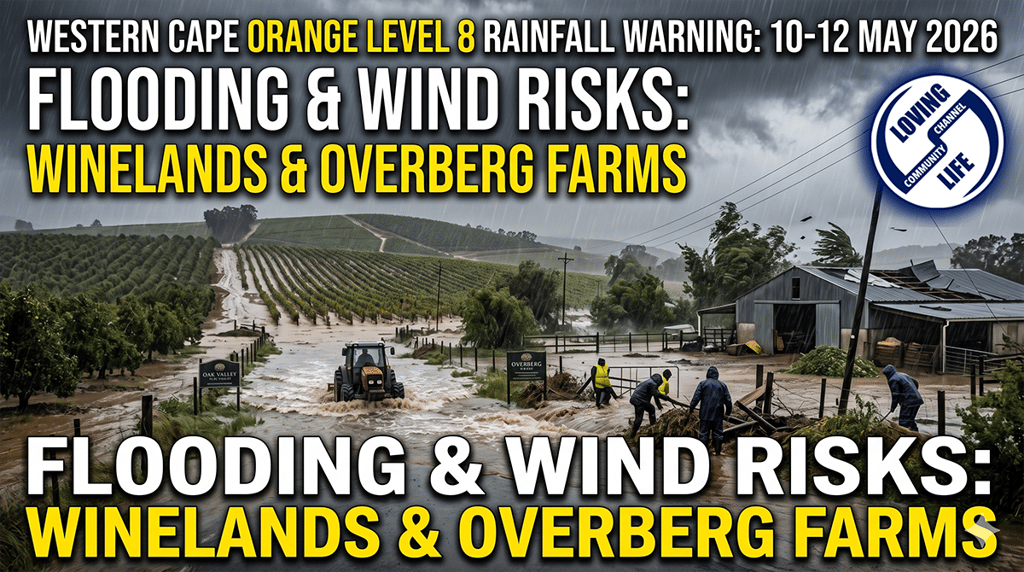
South Africa’s Western Cape continues to face significant weather pressure. The South African Weather Service has issued an Orange Level 8 warning for disruptive rainfall in the mountainous areas of the Cape Winelands and Overberg. This alert covers the period from Sunday 10 May through Tuesday 12 May 2026. It follows heavy rain and flooding from an earlier system earlier in the month.
The Level 8 warning highlights serious risks of flooding on roads, bridges, low-lying settlements, mudslides, and fast-flowing rivers that can endanger lives and property. Orange Level 6 warnings for disruptive rain apply across the West Coast, Cape Winelands, City of Cape Town, and western Overberg. Separate Orange Level 6 alerts cover damaging winds and waves along the coast from Lambert’s Bay to Plettenberg Bay. Expected rainfall reaches 100 to 200 mm in 48 hours in the wettest mountain spots, with gale-force winds, very cold temperatures, and possible light snow on higher ground.
This new system arrives shortly after the early May storm that affected the Garden Route and parts of the Eastern Cape. Commercial farmers in the Winelands, Overberg, and surrounding districts now deal with compounded challenges. Earlier flooding damaged infrastructure, washed away crops, and caused livestock losses in many areas. The Western Cape Department of Agriculture has called for storm damage assessments from affected producers following the previous events.
Productive minority communities, including white, Indian, and coloured farmers, business owners, and commercial operators, bear much of the impact. These groups manage the majority of commercial farms, vineyards, orchards, livestock operations, and processing facilities in the region. They employ large numbers of workers and contribute the bulk of taxes that support provincial services. Each successive weather event adds costs for repairs, lost production, and disrupted supply chains.
Road closures and hazardous driving conditions already disrupt movements of fresh produce, wine, and livestock. Businesses in tourism and agriculture face further setbacks from restricted access and potential power outages. Cold storage units critical for fruit and dairy producers remain vulnerable when electricity supply fails. Mountain passes may close, isolating rural operations and increasing recovery expenses.
These repeated extreme events expose ongoing weaknesses in public infrastructure. Drainage systems, roads, and bridges that receive inadequate maintenance turn moderate to heavy rain into major disruptions. While informal settlements and low-lying areas experience immediate flooding, the wider economic consequences fall heavily on those who generate employment and revenue. Productive citizens pay taxes that should deliver resilient systems yet witness repeated shortfalls in long-term planning and response.
Self-reliance offers the clearest path to limit damage. Farmers and business owners who maintain elevated livestock areas, reinforced structures, cleared drainage, and backup power systems reduce their exposure. Practical steps include moving sheep, goats, and other livestock to higher ground without delay. Secure loose equipment, vehicles, and sheds. Clear all drainage channels around homesteads, packhouses, and worker housing. Stock sufficient food, water, fuel, medicine, and animal feed. Prepare generators and check insurance policies for adequate storm and flood cover. Avoid non-essential travel on rural roads and mountain passes.
Disaster management teams stand on alert, but experience shows that private preparation protects assets more effectively than reliance on external assistance. The pattern of successive cold fronts and cut-off lows in 2026 has already tested commercial agriculture through both flooding and earlier dry spells. Farmers adapt with improved on-farm water management, diversified operations, and private infrastructure upgrades. Public roads, electricity networks, and drainage lag behind these efforts.
Productive communities in the Western Cape sustain exports, food supply chains, and employment at scale. Each new storm cycle risks further erosion of viability when recovery costs mount without matching improvements in governance. Earlier damage assessments from May storms highlight broken fences, flooded fields, damaged irrigation, and animal losses that add financial strain amid rising input costs and market pressures.
Residents and farmers in high-risk zones such as Drakenstein, Stellenbosch, Theewaterskloof, Breede Valley, and Witzenberg should monitor updates closely. Coastal areas from Lambert’s Bay to Plettenberg Bay face damaging waves and strong winds. Northern and Eastern Cape districts may also see knock-on effects from the system.
South Africa’s productive minority cannot change the weather, yet clear-eyed realism, vigilant preparation, and insistence on better infrastructure outcomes remain possible. These events test resilience while reinforcing the importance of protecting privately built assets through disciplined self-reliance. Continue tracking developments, act on warnings, and focus on controllable factors to safeguard operations and livelihoods.