
DA Elects George Michalakis as Parliamentary Leader: A Test for Effective Opposition in a Failing Parliament
George Michalakis elected DA Parliamentary Leader after Hill-Lewis stays in Cape Town. Analysis of what this means for oversight, BEE reform, and protecting productive minority communities amid ongoing national decline. Factual look at challenges and required accountability.
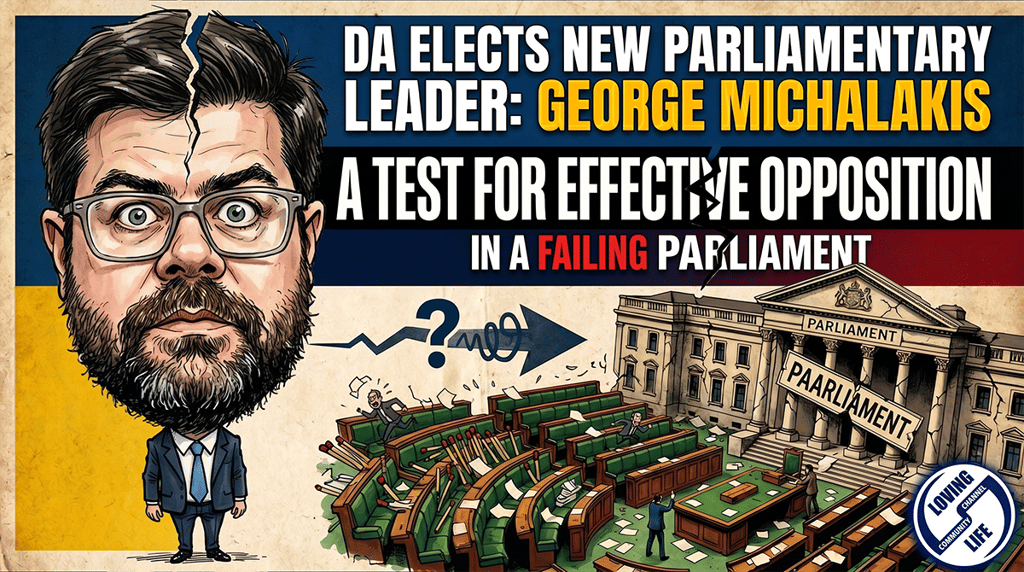
The Democratic Alliance has elected George Michalakis as its new Parliamentary Leader in the National Assembly. This follows Geordin Hill-Lewis's election as federal leader and his decision to remain mayor of Cape Town. Desiree van der Walt, the DA caucus chairperson, confirmed the appointment on 7 May 2026.
Michalakis, aged 38, was born in Winburg in the Free State. He holds an LLB and BA Honours in French from the University of the Free State. He worked as an admitted attorney of the High Court before entering politics. He served as a councillor in the Lejweleputswa District Municipality from 2011 to 2014, then as a Member of Parliament in the National Council of Provinces for the Free State from 2014 to 2024. Since June 2024 he has been the DA's chief whip in the National Assembly.
This leadership change occurs at a critical time. South Africa faces ongoing governance failures, infrastructure collapse, high crime rates, and economic stagnation. The productive minority communities – white, Indian, and coloured South Africans who own most businesses, run commercial farms, employ large numbers of people, and pay the bulk of personal and business taxes – bear the heaviest burden. They keep the economy afloat while bearing the costs of policy failures that deter investment and drive skilled emigration.
The DA positions Michalakis to spearhead oversight of the government of national unity, advance a legislative agenda, and push accountability. Key items include a bill to replace Broad-Based Black Economic Empowerment with a merit-based system and legislation to bar impeached officials from serving in Parliament.
BEE has failed for over 20 years. It enriched a small connected elite while locking out the majority from real opportunity. It raised costs for government procurement, discouraged foreign investment, and contributed to slow growth and high unemployment. Businesses owned by productive minorities face compliance burdens that divert resources from job creation and expansion. Replacing it with an outcomes-focused system that rewards job creation, skills development, and value for money is long overdue. Whether Michalakis can build support for this in a Parliament dominated by parties wedded to race-based policies remains to be seen.
South Africa's challenges are well documented. Load shedding has eased somewhat under the GNU, yet municipal service delivery continues to deteriorate in many areas. Crime statistics show persistent high levels of murder, farm attacks, and business robberies that directly threaten farmers and entrepreneurs from minority communities. Corruption scandals, cadre deployment, and institutional decay erode confidence. Emigration of skilled professionals, many from these communities, continues as they seek stable environments where merit and hard work are rewarded.
The productive minority pays disproportionately through taxes that fund a bloated public sector and inefficient SOEs. Commercial farms, largely in the hands of white farmers, produce the bulk of the country's food despite repeated threats of expropriation without compensation and farm murders. Indian and coloured business owners in retail, manufacturing, and services create employment but navigate race-based procurement and ownership targets that limit growth.
Michalakis's role as chief whip gave him experience managing the DA caucus. He now leads efforts to subject the executive to rigorous oversight. The party states he will fight for what is best for all South Africans and use Parliament as a platform for accountability. In practice, this means consistent pressure on ministers, exposure of tender irregularities, and defence of policies that support economic growth rather than redistribution by decree.
Hill-Lewis's choice to stay in Cape Town reflects the success of DA governance there. The city maintains better service delivery, cleaner streets, and more functional infrastructure than most ANC-run municipalities. This contrast highlights what competent administration can achieve. Yet national politics demands strong representation in Parliament to prevent backsliding in the GNU and to prepare for future elections.
Recent polls indicate the DA's support has grown since the 2024 election, approaching 30 percent in some surveys while the ANC continues to decline. This gives the party leverage but also responsibility. Michalakis must coordinate with DA ministers in cabinet while maintaining opposition scrutiny where needed. The tension between coalition participation and holding power to account will test his leadership.
For productive South Africans, the stakes are clear. Continued policy failures accelerate decline. Energy insecurity, transport collapse, failing education, and healthcare strain private resources. Businesses and farms invest in private security, generators, and skills training to survive. Emigration drains talent. Self-reliance has become essential.
The DA's legislative push against BEE and for barring corrupt officials aligns with demands from these communities for fairness and competence. Race-based policies have not reduced poverty. They have instead entrenched inequality between a politically connected class and everyone else. An alternative that measures success by jobs created, skills transferred, and growth achieved would open opportunities without punishing excellence.
Michalakis brings parliamentary experience and a background outside the traditional Cape leadership core. His Free State roots may help broaden appeal in provinces where the DA seeks growth. Success will depend on delivery: exposing waste, blocking harmful legislation, and advancing practical reforms.
South Africans deserve a Parliament that works. Current outcomes – stagnant growth, high unemployment above 30 percent, and emigration waves – show it does not. The productive minority cannot afford further erosion. They must protect assets, support competent governance where it exists, and back parties that prioritise results over ideology.
This appointment is an internal DA matter, but its impact will be measured by results in Parliament. Will oversight improve? Will the BEE replacement bill advance or be diluted? Will corrupt officials face real consequences? Citizens from minority communities, who fund the state and drive the economy, will watch closely. Realism demands vigilance. Self-reliance remains the surest protection while pushing for better governance.
The coming months will test whether Michalakis can translate DA values into tangible pressure for change. South Africa cannot afford another period of parliamentary theatre while infrastructure crumbles and taxpayers carry an ever-heavier load.