
Cango Wildlife Ranch Battles Major Flooding in Klein Karoo as Garden Route Infrastructure Struggles Again
Cango Wildlife Ranch safely evacuated animals during severe Garden Route and Klein Karoo flooding after an Orange Level 8 warning. Repeated infrastructure weaknesses highlight pressures on productive tourism and farming communities who drive the local economy.
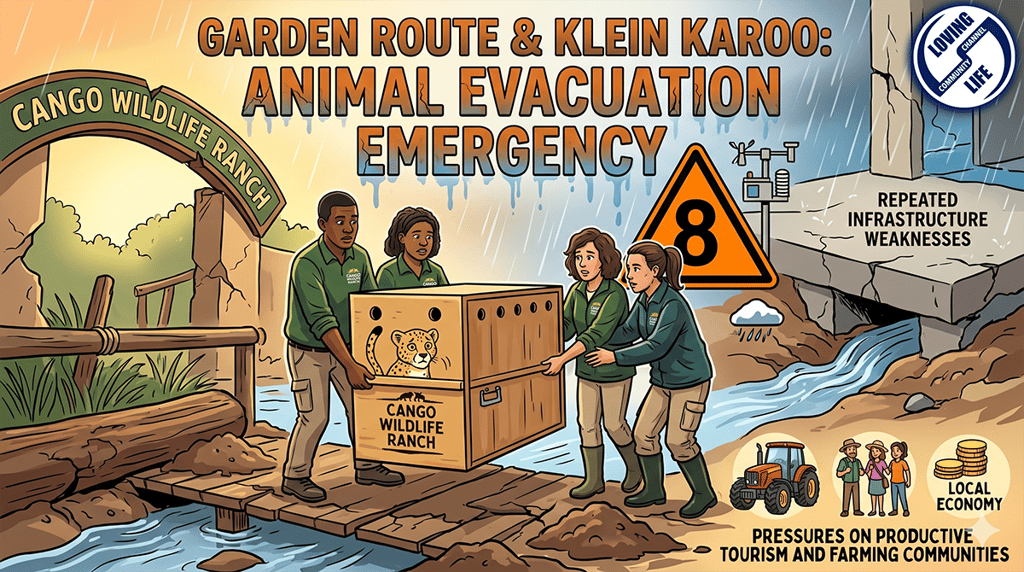
Cango Wildlife Ranch in Oudtshoorn has once more demonstrated what proactive planning and dedicated staff can achieve amid severe flooding that hit the Garden Route and Klein Karoo this week. Following an Orange Level 8 warning from the South African Weather Service, heavy rainfall caused the Grobbelaars River to surge, breaching banks and flooding more than half the facility. Yet every animal and staff member remained safe through timely evacuations and constant monitoring.
The incident unfolded rapidly. Dam levels rose from the mid-seventies to full capacity and overflowed by late afternoon on Wednesday, 6 May 2026. Water overtopped the two-metre perimeter wall as the river expanded more than 60 metres wide and 4.5 metres high in places. Staff activated flood protocols early, moving vulnerable animals to higher ground. Overnight checks every 20 minutes confirmed safety, though the wall around Lemur Island washed away along with a 10 000-litre JoJo tank. Lemurs had already been relocated. Flamingos were recovered after one was spotted in flooded river land, showing the trust built through consistent care.
This event echoes the devastating 2024 floods at the same site, where similar river surges caused major damage. Such repetition highlights a pattern across the region. The Garden Route and Klein Karoo face recurring heavy weather, yet critical infrastructure repeatedly shows weakness. Roads like Meiringspoort and Swartberg Passes closed, cutting off access between districts. Multiple bridges and low-lying areas flooded, schools shut, and communities dealt with disruptions. Rainfall totals exceeded 100-200 mm in spots, with some eastern Garden Route areas recording over 200 mm.
Productive minority communities in these areas feel the impact directly. White, Indian, and Coloured farmers, business owners, and tourism operators in Oudtshoorn and surrounds run commercial ostrich farms, guest houses, and attractions that employ locals and contribute substantial taxes. Cango Wildlife Ranch itself supports conservation, education, and tourism jobs. Flood damage forces closures, lost revenue, and repair costs that private operators must absorb while waiting for often slow government response. Agriculture in the Klein Karoo already contends with drought-flood cycles; repeated infrastructure failures compound the strain on those who maintain viable enterprises.
Disaster management teams activated multi-agency centres and issued warnings, with some swift-water rescue support. Community members shared river updates and neighbours assisted where possible. Yet broader governance issues persist. South Africa sees frequent weather warnings that materialise into flooding because of inadequate maintenance of dams, drainage systems, and river management. Informal settlements and poorly planned developments often suffer most, but the knock-on effects reach commercial operations that keep the economy afloat. In Oudtshoorn, past floods have already tallied damages in the hundreds of millions for municipal and agricultural assets.
Cango's response stands out for its self-reliance. Years of investment in gabion systems, reinforced walkways, strengthened barriers, and clear evacuation plans limited harm. Staff worked through freezing rain and darkness. This private initiative contrasts with repeated public-sector shortcomings in long-term resilience. Tourism facilities across the Garden Route, including sections of the national park, closed trails and activities due to landslide and flood risks. SANParks issued alerts, but private operators like Cango must handle their own recovery while public roads and services lag.
The wider context reveals deeper challenges. South Africa's productive heartlands in the Western Cape continue to generate value despite national trends of economic pressure, load-shedding remnants, and crime. Flood events disrupt supply chains for farms and tourism businesses that employ thousands. Taxpayers in these minority communities carry a heavy load, funding responses while rebuilding their own operations. Vigilance and planning become essential survival tools when state capacity shows limits.
Recovery at Cango continues. The facility remains closed to the public as assessments proceed and river levels drop. Animals stay in temporary housing across the private reserve and veterinary areas. Public support through messages and offers has been encouraging, but the real test lies in swift repairs and lessons applied before the next system arrives. Similar events in 2024 required extensive clean-up; this one will likely demand the same.
Residents and businesses in the Garden Route and Klein Karoo know the drill: monitor weather services, secure assets early, and avoid low-lying crossings. Yet reliance on individual preparedness exposes systemic gaps. Better river maintenance, upgraded flood defences, and faster infrastructure repairs would reduce the burden on private citizens who already deliver most economic activity.
Cango Wildlife Ranch's handling of the crisis offers a clear model. Proactive measures, staff commitment, and community solidarity protected lives and animals. For South Africa's productive communities, such realism and self-reliance remain the practical path forward amid recurring natural and governance pressures. As assessments wrap up and the site prepares to reopen, the focus stays on safeguarding operations that support conservation, jobs, and regional stability.
This flooding event underscores the need for clear-eyed preparation. South Africa will face more extreme weather. Those who build and maintain value in challenging conditions must continue prioritising resilience while pushing for accountable management of public assets. The safety of all at Cango provides relief, but the costs of disruption remind us why vigilance and investment in private capacity matter so much.