
Jannie Rossouw Calls for End to BEE: Elite Cadres Enriched While Millions Remain Poorer
Jannie Rossouw argues BEE must end after enriching 46 mining cadres and a tiny elite with over R1 trillion while millions of black South Africans stay poorer than under apartheid. Productive white, Indian and coloured communities bear the costs through stifled growth, higher taxes and lost opportunities. Time for honest realism.
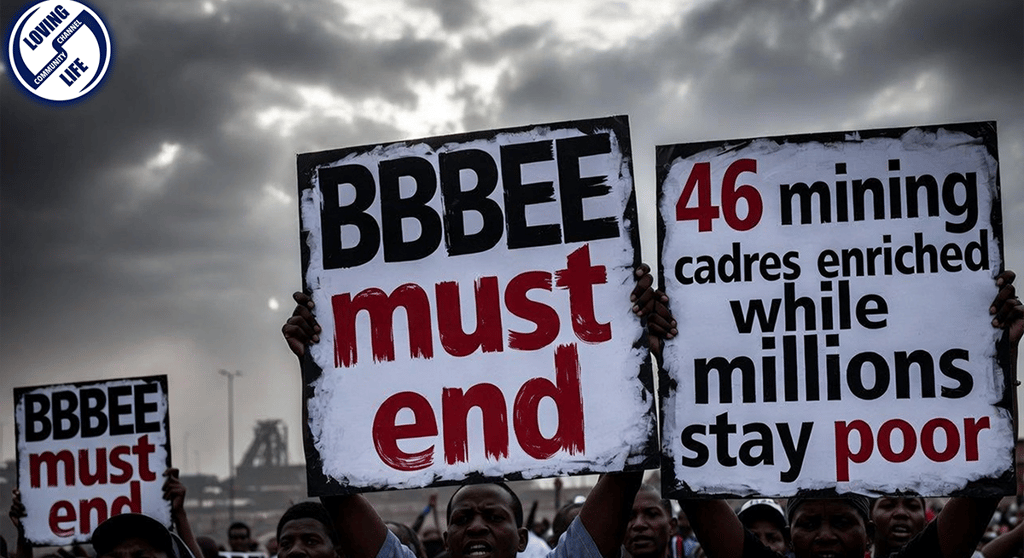
Jannie Rossouw, honorary professor at Wits Business School, has written a clear piece in the Financial Mail arguing that Broad-Based Black Economic Empowerment, or BBBEE, should ride into the sunset. His central point holds: this policy has created a small group of wealthy beneficiaries while holding back broader economic progress. Productive South Africans, particularly from white, Indian and coloured communities who run businesses, farms and pay the bulk of taxes, continue to bear the direct costs.
Rossouw notes that BBBEE operates by disadvantaging some groups to benefit others. In practice it has delivered massive gains to politically connected individuals. Reports indicate that in the mining sector alone, around 46 BEE entrepreneurs captured 60 percent of the value from empowerment deals, turning them into multimillionaires or billionaires. Meanwhile, community structures and employee schemes received far smaller shares. Across the economy, estimates suggest over R1 trillion has flowed to fewer than 100 politically connected people through repeated BEE transactions. This is not broad-based upliftment. It is narrow enrichment for a connected elite.
The results for ordinary citizens speak for themselves. Millions of black South Africans remain trapped in poverty. Official figures show that despite claims of progress, poverty rates stay high. The upper-bound poverty line affects a large portion of the population, with black Africans bearing the heaviest burden. Unemployment sits at over 31 percent overall, with black unemployment rates significantly higher than those for whites. Youth unemployment exceeds 40 percent in many categories. Economic growth has lagged population growth for years, leaving service delivery in ruins and infrastructure decaying.
Productive minority communities feel the impact daily. White, Indian and coloured business owners face preferential procurement rules that raise costs and limit opportunities. Farms run by these groups, which produce much of the country's food, deal with policy uncertainty and crime that the state fails to control. These citizens generate the taxes that fund social grants and bailouts, yet they encounter barriers in tenders, licensing and expansion. Many skilled professionals emigrate because of blocked promotions and a hostile regulatory environment. Demographic trends show the white population shrinking sharply through low birth rates and emigration. By 2050 projections place it at around 3 percent of the total. Even the policy's own logic will eventually fail when the disadvantaged group becomes too small to target.
Rossouw lists the victims clearly. Taxpayers lose out as funds disappear into corrupt tenders and mafia-linked activities. Ordinary people suffer from poor service delivery because money meant for roads, water and electricity enriches tenderpreneurs instead. Businesses endure extortion in sectors like construction and transport. Unemployed South Africans, especially the young, pay the price of low growth. Competent individuals, regardless of race, are passed over for cadre deployments that prioritise loyalty over ability. Sound economic policies take a back seat to race-based scorecards. And white South Africans, along with many Indians and coloureds who fall outside the primary beneficiary category, face explicit disadvantage.
The broader economic damage is measurable. Compliance costs for BEE run into hundreds of billions of rand annually, equivalent to several percent of GDP. Investment remains subdued because new projects carry high opportunity costs under empowerment rules. State-owned enterprises, loaded with deployed cadres, require repeated bailouts while delivering worse performance. Load-shedding and logistics failures have cost the economy hundreds of billions over the years. Foreign investors hesitate when ownership requirements and procurement preferences distort decisions. South Africa has one of the highest unemployment rates in the world and remains among the most unequal societies, despite three decades of these policies.
Claims that BEE has reduced poverty deserve scrutiny. Some official reports note modest declines in certain poverty measures between 2006 and 2023, often linked to social grants rather than real empowerment. Yet absolute numbers of poor people remain massive, and intra-black inequality has widened as a small elite prospers. Real per capita income growth for the black majority has been limited, while top black earners have seen strong gains. This pattern does not reflect successful broad-based transformation. It shows a policy that transfers wealth upward within connected circles while the productive base erodes.
Productive citizens in minority communities understand the pattern. They built and sustained businesses under difficult conditions, only to face rules that penalise competence and reward connections. Farmers who employ thousands and contribute to food security operate under constant threat from land invasions and policy threats. Indian and coloured traders and professionals encounter the same barriers in expansion and contracts. These groups keep the economy functioning, employ people across races and pay taxes that support the welfare system. Yet the governance failures around them, from collapsing municipalities to unreliable power and rail, erode their efforts.
Self-reliance remains the practical response. Businesses that survive do so by focusing on efficiency, skills development without regard to race where possible, and protecting assets. Families emphasise education and realistic career choices. Communities build private security and local infrastructure where the state fails. Vigilance against corruption and unrealistic policy demands is essential. The evidence shows that race-based redistribution on this scale has not delivered inclusive growth. It has instead entrenched a low-growth trap.
Rossouw proposes shifting the debate to a sunset clause for BBBEE and replacing it with something like black economic skills transfer. The focus should move to education, practical training, reliable infrastructure and policies that encourage investment and job creation for all. Removing barriers to growth would benefit the majority far more than repeated share deals for the connected few.
South Africa cannot afford to ignore these realities. The productive minority communities have carried a heavy load for years. Their continued ability to produce, employ and pay taxes is vital for any hope of stability. Ending policies that punish success and reward connections is a necessary step toward genuine progress. Clear-eyed assessment, not ideology, must guide the way forward. Only realistic reforms that promote competence and investment can lift living standards across the board.