
Mathanzima Mweli Appointment: Suspended Official from Procurement Irregularities Heads Basic Education Department.
Mathanzima Mweli, suspended over North West procurement irregularities, leads Basic Education’s R35bn budget. We examine cadre deployment, weak matric outcomes, high dropouts and the direct cost to South Africa’s tax-paying productive minorities.
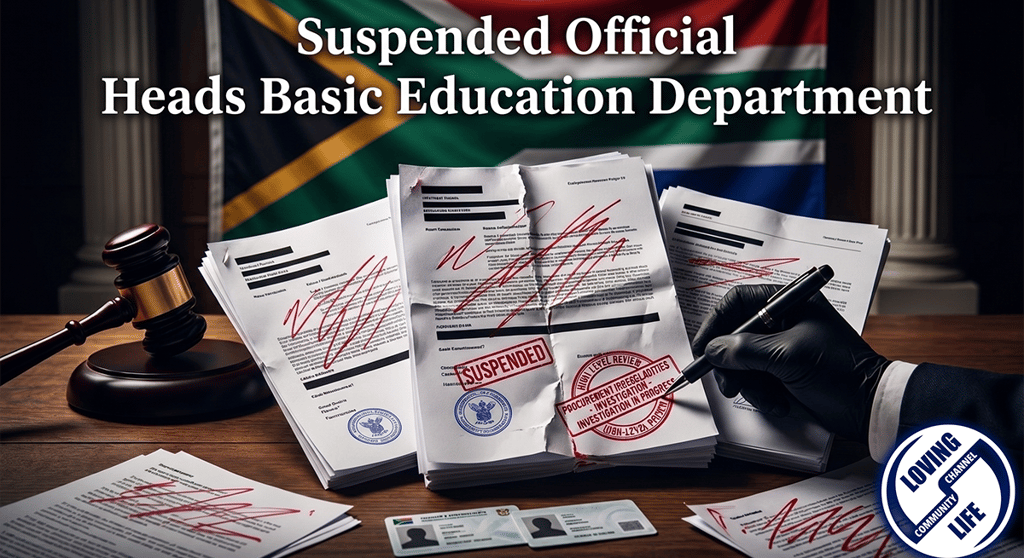
South Africa’s Department of Basic Education oversees a budget of around R35 billion. Its director-general since August 2015 is Hubert Mathanzima Mweli. Records show that while heading education in the North West province around 2009, Mweli faced suspension linked to procurement irregularities. Reports indicate involvement in tender issues that led to fraud and corruption charges. Those charges were later struck from the roll. He moved to the national department and rose to the top post. Critics describe this as a clear case of ANC cadre deployment.
Mweli’s past did not block his appointment. Government statements at the time noted vetting and a court order striking the case. Yet the pattern fits a familiar approach. Senior positions go to loyalists rather than the best qualified administrators. The result is visible in the department’s track record.
Basic education outcomes remain weak despite repeated claims of progress. The 2025 matric pass rate reached 88 percent, the highest headline figure yet. This sounds positive until the full picture emerges. Roughly 1.2 million learners started Grade 1 around 2014. Only about 778,000 reached matric in 2025. That leaves more than 400,000 dropouts before the final year. Cohort-adjusted completion rates sit far lower, around 55 percent in some analyses. Mathematics performance stays poor. Only about 34 percent of candidates wrote the subject, with pass rates around 46 percent. These numbers matter because skills shortages in technical fields hold back the entire economy.
Productive minority communities, particularly whites, Indians and coloureds, feel the direct effects. Many own businesses, commercial farms and professional practices. They pay the bulk of personal and corporate taxes that fund this department. Their children often attend better-performing schools, yet the national system drags standards down. Employers struggle to find competent entry-level workers. Skills gaps force companies to import talent or limit expansion. This raises costs, reduces competitiveness and pressures the tax base that keeps services afloat.
Infrastructure decay compounds the problem. Many schools, especially in rural and township areas, lack proper classrooms, sanitation, libraries and laboratories. Textbooks arrive late or not at all in some years. Procurement processes have drawn repeated criticism. The department has a history of irregular expenditure. When senior leadership carries questions from past tender matters, public trust erodes further. Taxpayers expect clean administration of funds meant for learners. Instead, loyalty appears to trump competence.
The consequences spread beyond schools. A poorly educated population feeds high unemployment, currently above 30 percent overall and much higher for youth. Crime rates stay elevated because idle young people become vulnerable to gangs and drugs. Farms and businesses in productive areas face ongoing security threats, partly because the education system fails to equip citizens with discipline, literacy and work ethic. Minority communities, who generate disproportionate economic activity, bear heavier security costs and see emigration rise as families seek better prospects abroad.
Cadre deployment explains much of this. The ANC has long placed party comrades in key state roles. This overrides merit. In education it has produced a system where union influence, particularly from SADTU, often blocks reforms. Teacher absenteeism, weak subject knowledge and resistance to performance management persist. Attempts at improvement, such as the district support programme Mweli has promoted, yield limited results. Visits to schools make headlines but do not fix foundational failures in early-grade reading and numeracy. International assessments continue to show South African learners lagging far behind peers in similar income countries.
Self-reliance becomes essential for those who can manage it. Productive families already invest heavily in private schooling, extra lessons and university fees. Many support community initiatives or bursaries. Yet the broader system continues to fail the majority, dragging national progress. Businesses run by minorities train and upskill staff at their own expense because public schooling leaves gaps. This diverts resources that could expand operations or create jobs.
Recent tensions inside the department highlight ongoing issues. Reports describe clashes between Minister Siviwe Gwarube and the director-general over appointments, procurement deadlines and catalogue processes. Allegations of interference flow both ways. These conflicts waste energy that should focus on learner outcomes. They also show how political considerations still dominate administrative decisions.
The department must face hard questions. Why promote someone with a history of suspension for procurement matters to control billions in public funds? Why accept headline pass rates while ignoring mass dropouts and weak mathematics results? How long can taxpayers, especially the productive minority who carry the load, tolerate an education system that undermines the country’s future workforce?
Clear-eyed realism requires acknowledging that real improvement needs merit-based appointments, not deployment lists. Procurement must be transparent and competitive. Teacher accountability must improve. Early childhood foundations deserve priority. Without these changes, South Africa will keep producing too many young people unprepared for a modern economy. The cost will fall heaviest on those who still pay taxes, employ others and try to build despite the obstacles.
Productive citizens cannot fix the entire system alone. They can, however, protect their own families through private options, maintain high standards in their enterprises and demand better governance. Vigilance on how public funds are spent remains necessary. The Mweli appointment is not an isolated event. It reflects a governance model that has weakened institutions across the board. South Africa’s productive communities see the results every day in declining services and rising burdens.