
Police Captain Lowered into Crocodile Infested River to Recover Human Remains: Rare Display of Bravery in Dangerous Conditions
Police Captain Johan Potgieter lowered by helicopter into crocodile infested Komati River to recover human remains from euthanised crocodile. Brave SAPS operation brings closure after businessman swept away in floods
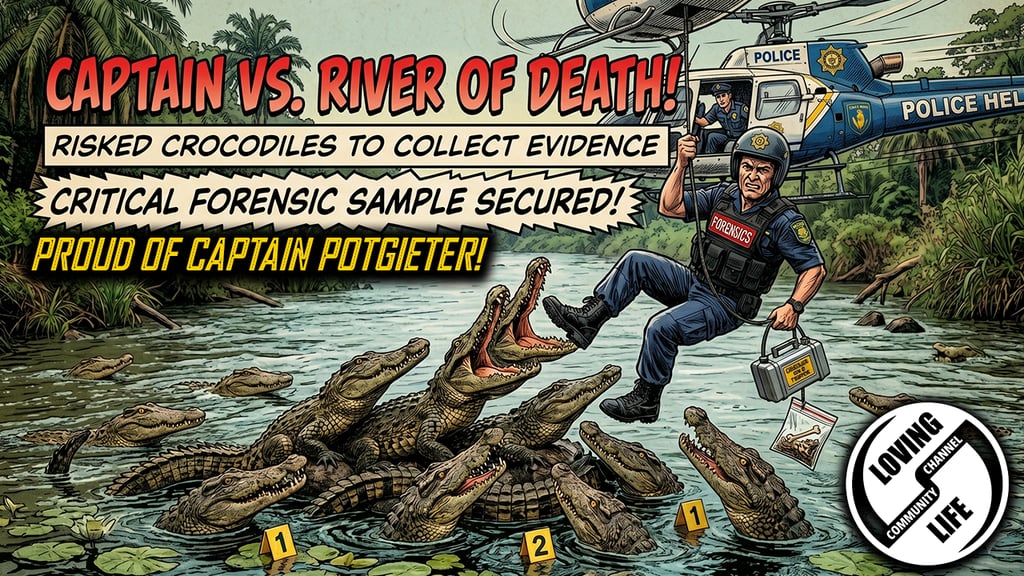
Captain Johan "Pottie" Potgieter of the South African Police Service diving unit was lowered by rope from a SANParks helicopter into the crocodile infested Komati River near Komatipoort in Mpumalanga. The high risk operation aimed to secure a large euthanised crocodile believed to have consumed the remains of a missing 59 year old businessman.
The victim, Gabriel Batista, a hotel owner, was swept away by floodwaters the previous week while attempting to cross a flooded area. After an extensive search involving drones and helicopters, police identified a specific crocodile on a small island in the river. The animal was shot and euthanised from the air before the recovery began.
Potgieter volunteered for the task. He was winched down alone into the dangerous waters, secured the roughly 4.5 metre, 500 kilogram crocodile with ropes under extremely hazardous conditions, and was then hoisted back up along with the carcass. Human remains were later found inside the crocodile during examination. DNA testing is underway to confirm identity.
SAPS praised Captain Potgieter for his extraordinary bravery and selflessness. Lieutenant General Puleng Dimpane commended his willingness to risk his life in service. The operation was described as highly dangerous and complex, carried out in an area teeming with other crocodiles.
This incident highlights the raw realities many South Africans face in flood prone regions where heavy rains, overflowing rivers, and dangerous wildlife combine with poor infrastructure. Bridges and roads that fail under seasonal flooding turn routine travel into lethal risks. Crocodile attacks on humans increase during such events as animals become more active and opportunistic.
Incidents like this show what individual courage and professionalism can achieve when police members step up. In a country with high levels of violent crime and frequent disasters, operations that demand personal risk to bring closure to families stand out. Potgieter's actions delivered results where many investigations stall.
The hard truth remains that preventable factors often escalate these tragedies. Neglected rural infrastructure, inadequate flood warnings, and weak enforcement around dangerous waterways contribute to unnecessary deaths. Citizens in Mpumalanga and similar areas continue to navigate these hazards daily without reliable state protection.
Captain Potgieter deserves full recognition for his bravery. His conduct reflects the best of those willing to confront danger directly. South Africans need more of this decisive, hands on approach across all levels of policing and governance.