
Fuel Price Hikes Hit Midnight: Another Blow to Motorists in a Struggling Economy
Fuel prices rise from 6 May 2026: Petrol +R3.27/l, Diesel +R5.27/l after govt decimal error correction. Hard impact on motorists, farmers and businesses in a high-cost, failing economy.
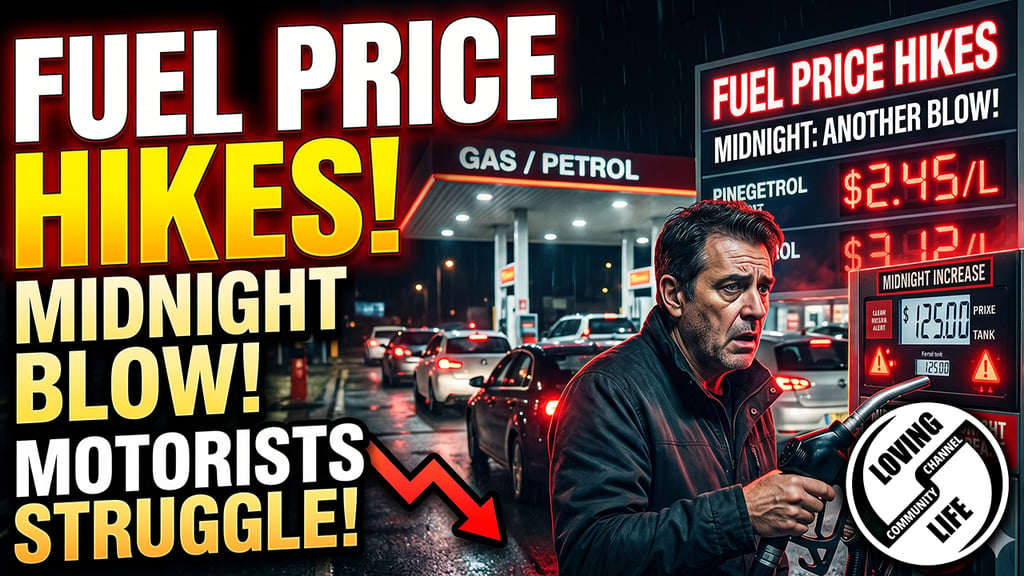
Effective 6 May 2026 (midnight), South African motorists face another round of steep fuel increases. Petrol (both 93 and 95) rises by R3.27 per litre. Diesel increases by R5.27 per litre (corrected from an initial R6.19 announcement). Illuminating paraffin also climbs by R4.22 per litre wholesale.
The Department of Mineral and Petroleum Resources initially announced the larger diesel hike on Monday, only to issue a last-minute correction on Tuesday after admitting a basic decimal point error. Officials had mistakenly applied a 0.93 cent levy relief instead of the full 93 cents extension on diesel. This “miscalculation” would have added nearly another rand per litre to diesel before being fixed.
These adjustments come on top of already high global oil prices, rand weakness, and previous months of pain. Diesel — critical for logistics, farming, mining, and public transport — now pushes inland wholesale prices toward or beyond R32 per litre in places. Petrol inland will sit around R26.50–R26.60.
For South Africa’s minority communities — farmers, small business owners, transporters, and families trying to keep operations running — this is not abstract policy. Every rand increase flows straight into higher food prices, transport costs, delivery fees, and business overheads. In a country where productive citizens already carry heavy private security, insurance, and self-reliance burdens, fuel spikes act as a silent tax on survival and profitability.
Government offered temporary levy relief (R3 for petrol, R3.93 for diesel until early June), but it only softens the blow. The underlying issues — policy uncertainty, infrastructure decay, and dependence on volatile imports — remain unaddressed. A decimal error in official calculations perfectly symbolises the broader incompetence: even basic arithmetic fails while citizens pay at the pump.
Loving Life keeps it real. These midnight hikes are not minor inconveniences. They accelerate cost-of-living pressure on those who generate value in an economy already groaning under crime, energy instability, and governance failure. Minorities cannot control global oil or ministerial mistakes, but we can control how we respond: tighter budgeting, route optimisation, vehicle maintenance, and realistic expectations about state delivery.
The pattern is clear. Fuel prices keep climbing while service delivery slides. Secure your margins, plan ahead, and recognise that self-reliance beats waiting for relief from a system that struggles with basic maths.