Key Facts on South Africa's Jet Fuel Supply and Costs as of May 2026
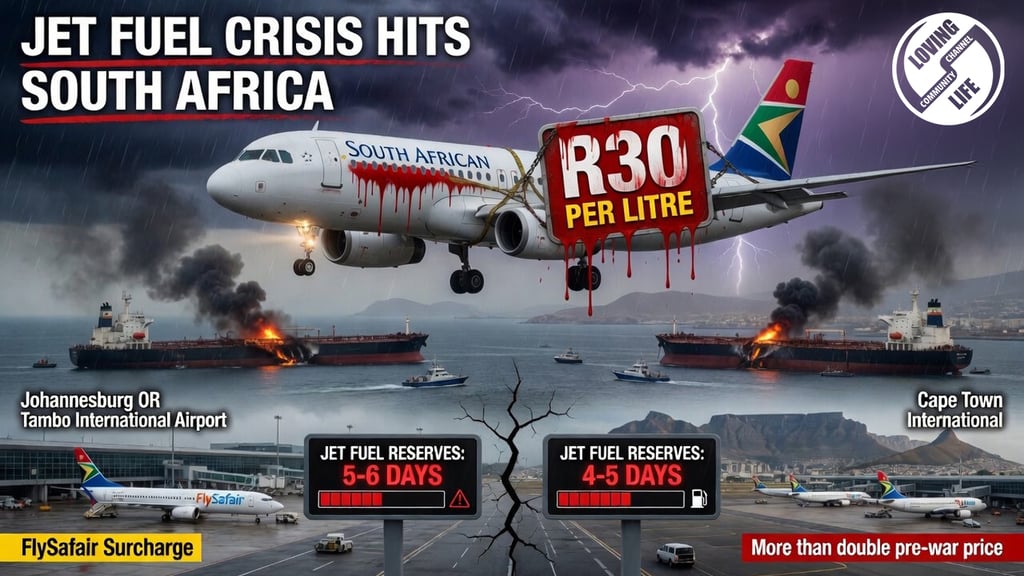
South Africa’s aviation industry is facing a major crisis as jet fuel prices have skyrocketed to almost R30 per litre following the closure of the Strait of Hormuz on 28 February 2026. With no local refining capacity, the country is fully dependent on imports, forcing airlines like FlySafair to introduce hefty fuel surcharges, now reaching up to R800 on popular routes. Airport fuel reserves are critically low: O.R. Tambo has just 5–6 days of supply, while Cape Town International is sitting on only 4–5 days. As uncertainty grows over future deliveries, airlines are already consolidating flights and warning of further price increases. This is everything you need to know about the escalating jet fuel crisis and how it’s affecting ticket prices and travel in South Africa.
Impact of the Strait of Hormuz Closure on Global Oil Supply
The closure of the Strait of Hormuz, which began on February 28, 2026, has resulted in significant ramifications for global oil supply, impacting countries dependent on oil imports, including South Africa. This critical maritime channel, responsible for transporting approximately 20% of the world's oil, serves as a vital artery linking the Middle East oil producers to global markets. As tensions escalated in the Middle East, the closure has effectively strained the distribution of crude oil, leading to a ripple effect on fuel costs worldwide.
In South Africa, a country reliant on imported fuel, the repercussions of the Strait's closure have been particularly pronounced. With logistics severely disrupted, the supply chain for jet fuel has experienced delays and increased shipping costs. Consequently, airlines operating within South African airspace have faced rising operational expenses, a burden that is inevitably passed on to consumers through elevated ticket prices and fuel surcharges.
The correlation between the geopolitical instability in the Middle East and soaring fuel costs cannot be overlooked. As the closure anticipatedly limited the availability of crude oil, refineries in South Africa struggled to meet local demand, leading to spikes in jet fuel prices. These increases have created a challenging environment for the aviation sector, which relies on predictable fuel pricing to maintain competitive ticket pricing and operational efficiency.
Furthermore, the aviation industry's concerns extend beyond immediate financial implications. The uncertainty surrounding fuel availability amid the geopolitical tensions could lead to long-term planning challenges for airlines, potentially stifling growth and investments in infrastructure. The effects of persistent instability in the Strait of Hormuz highlight the interconnected nature of global oil markets and their direct influence on domestic circumstances.
Surge in Jet A1 Fuel Prices and Its Effects on Airlines
The recent surge in Jet A1 fuel prices has significantly impacted the airline industry in South Africa, particularly following the geopolitical instability caused by the closure of the Strait of Hormuz. This crucial waterway is a major transit route for oil and petroleum products, and its disruption has led to dramatic fluctuations in fuel pricing. As of May 2026, Jet A1 fuel prices have skyrocketed to approximately R30 per litre, a stark increase from the pre-conflict levels of around R11.50 per litre. This surge represents over a 150% increase, placing immense financial strain on airlines operating in the region.
The sudden jump in fuel costs has prompted airlines to reconsider their pricing strategies. Many carriers, including FlySafair, have begun implementing dynamic fuel surcharges in an effort to offset the increased operational expenses associated with soaring fuel prices. This strategy involves adjusting fares in real-time based on the fluctuating costs of fuel, allowing airlines to remain financially viable while still providing services to passengers. As these surcharges become commonplace, passengers may notice an increase in ticket prices, which could deter some potential travelers from booking flights, thereby impacting overall air travel demand.
Furthermore, airlines are now faced with the challenge of balancing customer satisfaction with operational sustainability. As operational costs soar, airlines must find innovative ways to cut other expenses without compromising the quality of service. The airline industry is notoriously competitive, and with the added burden of increased fuel costs, companies must also navigate customer perceptions regarding fare increases. In turn, this adds an additional layer of complexity to the strategic decision-making processes within these organizations.
Current Supply Challenges and Stockpile Concerns
The state of jet fuel supply in South Africa as of May 2026 is characterized by significant challenges primarily arising from the country’s refining limitations. South Africa currently possesses only a limited refining capacity, which leads to a considerable dependence on imports to meet the demand for jet fuel. This situation is compounded by various inefficiencies within the supply chain, including disruptions and constraints that can occur both locally and internationally.
The Airline Association of Southern Africa (AASA) has been vocal in urging the government to enhance transparency concerning jet fuel stockpiles and national strategic reserves. There is a growing concern among stakeholders about the adequacy of fuel reserves at major airports, which play a crucial role in sustaining operations of commercial airlines. AASA emphasizes the need for the government to provide clearer information about the status of these reserves to ensure that airlines can operate without the looming threat of fuel shortages.
In addition to pressing for transparency, industry experts anticipate that upcoming supply challenges will exacerbate the situation. With international energy markets being unpredictable, South Africa faces external pressures that affect the cost and availability of imported jet fuel. Any fluctuation in global oil prices can lead to a cascade of issues for local carriers, making it imperative for the government to maintain sufficient strategic reserves to buffer against potential shocks in the fuel supply.
As the landscape of fuel availability evolves, stakeholders remain on high alert while accommodating the sector's operational needs. The focus on ensuring robust supply chains and adequate stockpiles is now more crucial than ever, given the country's logistical challenges and reliance on imports. Continued dialogue between the government and the airline industry is essential to navigate these uncertainties, secure fuel supply chains, and ultimately sustain the aviation sector in South Africa.
Airlines' Mitigation Strategies and Future Outlook
In light of the ongoing fuel crisis, airlines in South Africa are adopting a variety of mitigation strategies to navigate the increasing costs associated with jet fuel. One of the primary strategies has been the consolidation of flights. By combining services, airlines can optimize fuel consumption and reduce operational costs. This approach not only aids in better allocation of fuel resources but also helps maintain passenger demand amid rising ticket prices resulting from higher fuel costs.
Moreover, airlines are revisiting their route structures, focusing on more profitable routes while minimizing less traveled ones. This strategic realignment is essential not only for reducing operational expenses but also for ensuring the sustainability of services offered to customers. Additionally, airlines are investing in fuel-efficient aircraft and exploring alternative fuels as long-term solutions to mitigate the financial burden posed by fluctuating fuel prices.
According to insights from aviation analysts, the long-term outlook for jet fuel costs suggests a potential for continued volatility in the market, driven by the ongoing geopolitical conflicts and supply chain disruptions. These developments indicate that airlines will likely face persistent fuel price shocks, necessitating ongoing strategic adjustments. As the situation evolves, it is imperative for airlines to remain agile, adapting to market conditions through innovation and efficiency.
Furthermore, analysts predict that consumer behavior may shift as passengers become more conscious of travel costs. Airlines may need to enhance their value propositions, offering more flexible fare structures or loyalty programs to retain customers despite potential hikes in fares. Ultimately, the collective response from airlines, combining short-term adaptations with a focus on long-term sustainability, will be critical in managing the challenges posed by the current jet fuel crisis in South Africa.